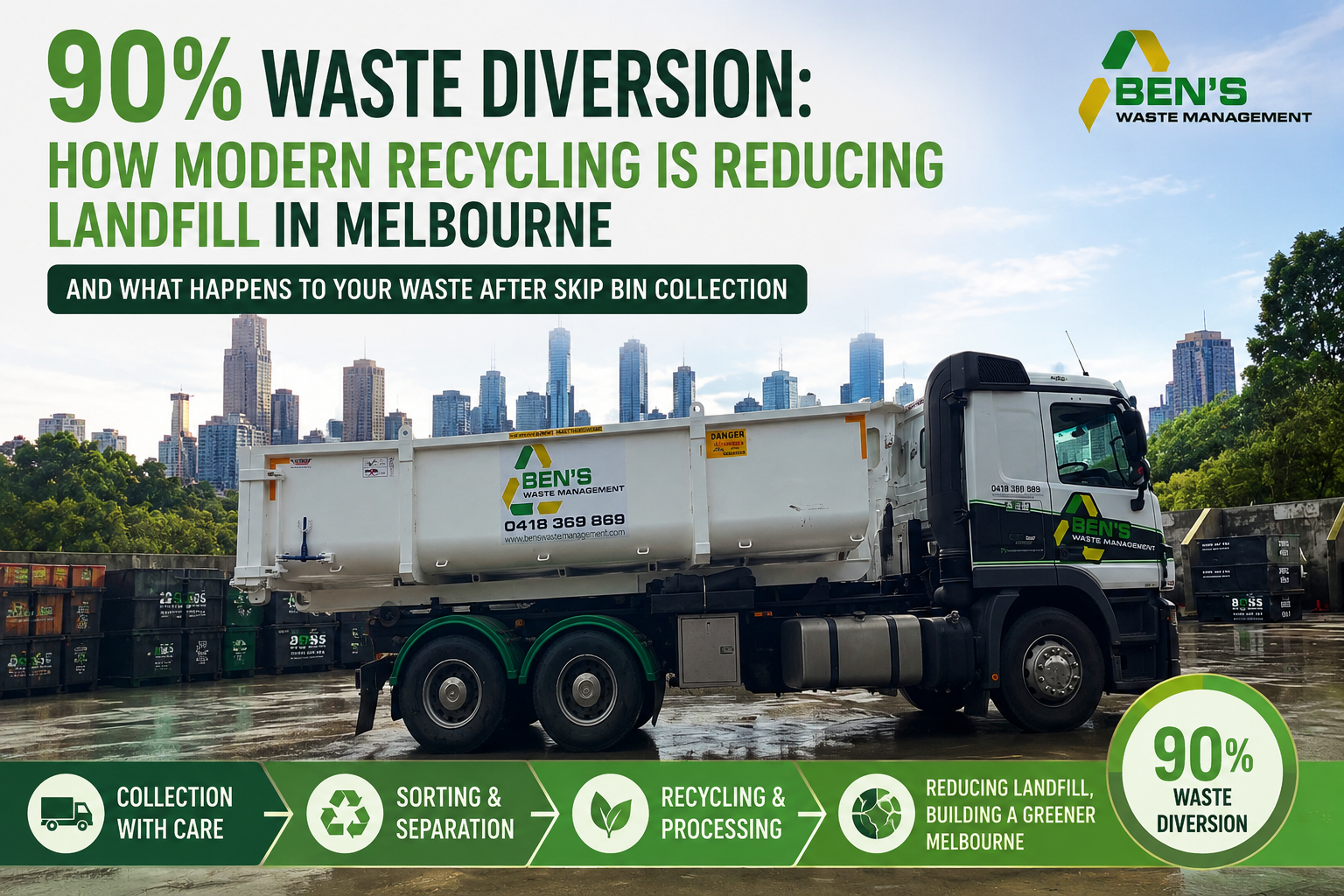
90% Waste Diversion: How Modern Recycling is Reducing Landfill in Melbourne and What Happens to Your Waste After Skip Bin Collection
Introduction
90% Waste Diversion is becoming an achievable benchmark in modern waste management , so does the amount of waste generated by households, businesses, construction projects and renovations. Traditionally, a significant portion of this waste ended up in landfill, contributing to environmental concerns such as greenhouse gas emissions, land degradation and the depletion of valuable natural resources.
Today, however, modern waste management practices are transforming the way waste is handled. Thanks to advanced recycling technologies and resource recovery facilities, many waste management companies in Melbourne are achieving waste diversion rates of up to 90%. This means that the vast majority of waste collected through skip bins is recycled, reused or repurposed rather than being buried in landfill.
But what exactly happens to your waste after a skip bin is collected? And how is modern recycling helping Melbourne move toward a more sustainable future?
Let’s take a closer look.
Understanding Waste Diversion
Waste diversion refers to the process of redirecting waste away from landfill through recycling, reuse, composting and resource recovery programs. The goal is simple: recover as many valuable materials as possible and minimise the amount of waste that ultimately requires disposal.
A 90% waste diversion rate means that only 10% of collected materials end up in landfill, while the remaining 90% are recovered and reintroduced into the economy as usable resources.
This approach forms the foundation of a circular economy, where materials are continuously reused rather than discarded after a single use.
Why Landfill Reduction Matters
Landfills have long been the traditional destination for waste, but they come with significant environmental challenges.
Greenhouse Gas Emissions
Organic waste decomposing in landfill produces methane, a greenhouse gas far more potent than carbon dioxide. Reducing landfill waste helps lower emissions and supports climate action initiatives.
Resource Wastage
Many materials commonly found in skip bins—including metals, timber, concrete, cardboard, and plastics—can be recycled and reused. Sending these materials to landfill wastes valuable resources that could otherwise support manufacturing and construction industries.
Limited Land Availability
Landfill sites require significant land space and long-term environmental monitoring. As Melbourne’s population grows, reducing dependence on landfill becomes increasingly important.
What Happens After Skip Bin Collection in Melbourne?
Many people assume that once a skip bin is collected, its contents are simply dumped into landfill. In reality, the journey is far more sophisticated and environmentally responsible.
Step 1: Collection and Transportation
Once your skip bin is ready for pickup, a specialised collection vehicle transports the contents to a licensed waste transfer station or resource recovery facility.
At this stage, the waste is weighed, recorded, and inspected before entering the sorting process.
Modern waste operators track incoming waste streams to identify opportunities for greater recycling and recovery.
Step 2: Waste Sorting and Separation
Sorting is one of the most important stages in the waste management process.
At resource recovery facilities, waste is separated into various material categories, including:
- Concrete and masonry
- Metals
- Timber
- Green waste
- Cardboard and paper
- Plastics
- Soil and rubble
- General waste
This process often combines advanced machinery with manual inspection to maximise recovery rates.
Technologies such as conveyor systems, magnetic separators, screening equipment, and air classifiers help identify and separate recyclable materials efficiently.
Step 3: Material Recovery and Recycling
Once materials have been sorted, they are sent to specialist recycling facilities for processing.
Concrete and Bricks
Construction and demolition waste often contains large amounts of concrete and brick. These materials are crushed into aggregate and reused in road construction, drainage systems, and new building projects.
Metals
Steel, aluminium, copper, and other metals are highly recyclable. These materials are melted down and used to manufacture new products without losing their quality.
Timber
Clean timber can be processed into mulch, landscaping products, animal bedding or recycled wood products.
Green Waste
Garden waste, tree branches, and vegetation are converted into compost, mulch and soil conditioners that support landscaping and agriculture.
Cardboard and Paper
Paper products are pulped and transformed into new packaging materials, reducing the demand for virgin timber resources.
Plastics
Suitable plastics are sorted by type, cleaned, processed and remanufactured into new products, helping reduce plastic pollution and resource consumption.
The Role of Advanced Recycling Technology
Modern recycling facilities are significantly more advanced than those of the past.
Innovative technologies help increase recovery rates and improve material quality, including:
- Optical sorting systems
- Magnetic separation equipment
- Automated screening machinery
- Density separation technology
- Quality control inspection systems
These technologies allow waste management companies to recover a greater percentage of recyclable materials while reducing contamination.
The result is higher waste diversion rates and lower landfill dependence.
Construction Waste: A Major Opportunity for Recycling
Construction and demolition projects generate some of the largest waste volumes in Melbourne.
Fortunately, many construction materials are highly recyclable.
Examples include:
- Concrete
- Bricks
- Asphalt
- Steel
- Timber
- Soil
By using dedicated skip bins and responsible waste management services, builders and contractors can significantly reduce their environmental footprint while supporting sustainable construction practices.
Many commercial projects now include waste diversion targets as part of their sustainability objectives.
Benefits of Achieving 90% Waste Diversion
Reduced Environmental Impact
Less waste entering landfill means lower greenhouse gas emissions, reduced land degradation and decreased environmental pollution.
Conservation of Natural Resources
Recycling materials reduces the need to extract raw resources such as timber, metals, and aggregates.
Energy Savings
Manufacturing products from recycled materials often requires significantly less energy than producing them from virgin resources.
Support for the Circular Economy
Recovered materials remain in productive use for longer, reducing waste generation and promoting sustainable economic growth.
Extended Landfill Lifespan
Diverting waste away from landfill helps preserve existing landfill capacity and reduces the need for new disposal sites.
How Melbourne Residents and Businesses Can Help
Achieving high recycling rates requires participation from everyone.
Here are some simple ways to improve waste diversion outcomes:
Separate Waste Where Possible
Keeping recyclable materials separate from general waste improves recovery rates and reduces contamination.
Avoid Hazardous Contamination
Items such as chemicals, paints, batteries and hazardous materials require specialised disposal methods and should never be mixed with general skip bin waste.
Choose Responsible Waste Management Providers
Select skip bin providers that prioritise recycling and resource recovery rather than landfill disposal.
Understand Accepted Materials
Knowing what can and cannot be placed in a skip bin helps maximise recycling opportunities.
The Future of Waste Management in Melbourne
Melbourne’s waste management industry continues to invest in advanced recycling infrastructure, resource recovery facilities and sustainability initiatives.
As recycling technology improves and environmental regulations evolve, diversion rates are expected to increase even further.
Businesses, councils, and residents are becoming more aware of the importance of responsible waste management, helping drive the transition toward a more circular economy.
The future of waste management is no longer about disposal—it is about resource recovery, sustainability and creating value from materials that were once considered waste.
Conclusion
Modern recycling is changing the way Melbourne manages waste. Through advanced sorting systems, innovative recycling technologies and dedicated resource recovery facilities, many waste management providers are now diverting up to 90% of collected materials away from landfill.
When your skip bin is collected, its contents begin a carefully managed journey that prioritises recycling, reuse and sustainability. Materials such as concrete, metals, timber, green waste, cardboard and plastics are recovered and transformed into valuable resources that support new products and infrastructure.
By choosing responsible skip bin services and supporting waste diversion initiatives, Melbourne residents and businesses can play an important role in reducing landfill, conserving natural resources and building a cleaner, more sustainable future for generations to come.